
“Little Tips” of the SHS (Sliding Hip Screw) Procedure HTS Oblique Locking Hip Screw System We have started distributing intraoperative videos using the HTS Oblique Locking Hip Screw System “Procedure points and actual cases” under the supervision of expert doctors. Please take a look.
Procedures and cases using the HTS Oblique Locking Hip Screw System
HTS Oblique Locking Hip Screw System Category:Femur Supervision: Fukushima Medical University Department of Traumatology, General South Tohoku Hospital, Trauma Center, Dr. Shigetaka Kato We have started distributing intraoperative videos using the HTS Oblique Locking Hip Screw System “Procedure points and actual cases” under the supervision of expert doctors. Please take a look. (Narration audio will appear.) Please check the surrounding environment when playing)
HTS Oblique Locking Hip Screw System Category:Femur Supervision: Fukushima Medical University Department of Traumatology, General South Tohoku Hospital, Trauma Center, Dr. Shigetaka Kato We have started distributing intraoperative videos using the HTS Oblique Locking Hip Screw System “Procedure points and actual cases” under the supervision of expert doctors. Please take a look. (Narration audio will appear.) Please check the surrounding environment when playing)
Features of the HTS Oblique Locking Hip Screw System 3 Features
Flexible implant placement
The insertion position and direction can be freely determined, so that it can be inserted through the center of both the head of the bone and the neck. Therefore, postoperative telescopy can reduce the risk of reduction becoming intramedullary.
Approach path from the outside
This is an approach in which the thigh fascia is incised and the vastus lateralis muscle is lifted. The fracture can be reached directly from the approach route, and direct reduction operation is possible. There is no need to worry about the implant being inserted through the fracture and causing the reduction to collapse or the gluteus medius muscle as in SFN.
Surgery with external dislocation is possible
In external dislocation, it is easy to obtain the ideal reduction position, and implants can be inserted while maintaining the external dislocation.
Pick up only the places you want to see.
Click here if you want to view "Product Features Only", "Actual Cases Only", and "Surgical Procedures Only"
Browse product introductions only
It illustrates what kind of characteristics are provided to achieve a strong fixing force. Illustrations are used to explain in detail the route of entry from the outside, the placement of implants, and the surgical method of external dislocation.
Browse product introductions only
It illustrates what kind of characteristics are provided to achieve a strong fixing force. Illustrations are used to explain in detail the route of entry from the outside, the placement of implants, and the surgical method of external dislocation.
Check only the points of the procedure
Using actual intraoperative videos such as “body position and reduction” and “skin nodes and incisions” as examples, the points of surgery are explained in detail for each scene. You can check implant insertion, drilling, pin insertion, etc., based on surgical images and videos.
Check only the points of the procedure
Using actual intraoperative videos such as “body position and reduction” and “skin nodes and incisions” as examples, the points of surgery are explained in detail for each scene. You can check implant insertion, drilling, pin insertion, etc., based on surgical images and videos.
I want to refer only to cases
Based on the actual case, you can check the progress from immediately after surgery to 3 months later. You can see multiple cases, such as the reduction of a case with a large banana bone fragment.
I want to refer only to cases
Based on the actual case, you can check the progress from immediately after surgery to 3 months later. You can see multiple cases, such as the reduction of a case with a large banana bone fragment.
Comparison of surgical procedures
Case introduction 2 min. 30 sec. Key points: ●Selection of surgical method based on fracture stage ●Risk of adjacent vertebral fractures ●Differences in surgical invasiveness
Comparison of surgical procedures
Case introduction 2 min. 30 sec. Key points: ●Selection of surgical method based on fracture stage ●Risk of adjacent vertebral fractures ●Differences in surgical invasiveness
Introducing the products that appear in the lecture
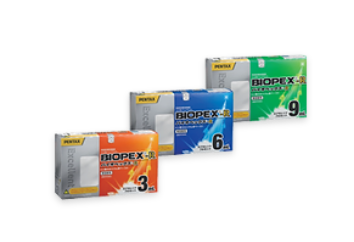
Bone Replacement Biopex-R Excellent
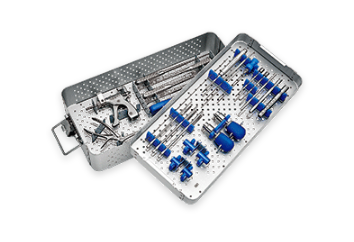
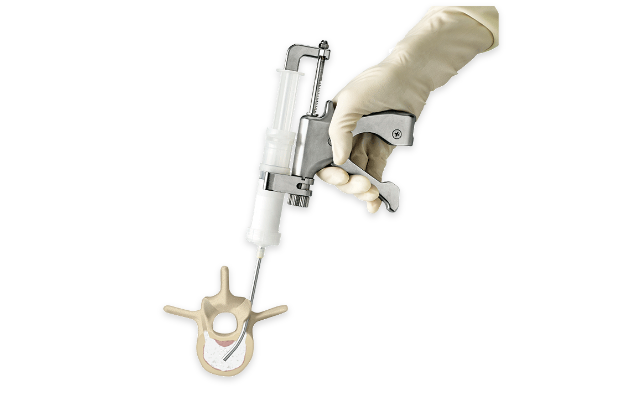
Minimally invasive vertebroplasty system BIOPEX-R MVP
Features of the HTS Oblique Locking Hip Screw System 3 Features
Flexible implant placement
The insertion position and direction can be freely determined, so that it can be inserted through the center of both the head of the bone and the neck. Therefore, postoperative telescopy can reduce the risk of reduction becoming intramedullary.
Approach path from the outside
This is an approach in which the thigh fascia is incised and the vastus lateralis muscle is lifted. The fracture can be reached directly from the approach route, and direct reduction operation is possible. There is no need to worry about the implant being inserted through the fracture and causing the reduction to collapse or the gluteus medius muscle as in SFN.
Surgery with external dislocation is possible
In external dislocation, it is easy to obtain the ideal reduction position, and implants can be inserted while maintaining the external dislocation.

Angular stability
Four 4.2mm locking pins are used in two 5.0mm locking pins in the proximal position, and three 4.2mm locking pins are used in the distal position, 90° and 45° lowering. High pull-out strength and stress dispersion Download the catalogue to learn more
Rotational stability
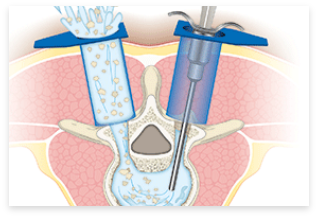
Rotational stability is ensured by inserting a 5.0mm locking pin at the proximal and distal sides of the main lug screw. Download the catalogue to learn more
Angular stability
Four 4.2mm locking pins are used in two 5.0mm locking pins in the proximal position, and three 4.2mm locking pins are used in the distal position, 90° and 45° lowering. High pull-out strength and stress dispersion Download the catalogue to learn more
If you would like to learn more about our products, click here.
If you would like to know more about our products, please contact us by clicking “I would like to be contacted by one of our sales representatives” below. After confirming the contents of the transmission, the person in charge will contact you as soon as possible.
Brand Name : Oblique Clocking Hip Screw System Medical Device Approval Number : 22600BZX00160000 Category:Medical 04 Orthopedic supplies Highly Controlled Medical Device (Class III.) Generic name: Compression hip plate for internal fixation Manufacturer and distributor: HOYA Technosurgical Co., Ltd. Brand name: Obligatory Hip Screw System Surgical Instrument Medical device notification number: 13B1X10173224101 Classification: Vessel 58 Orthopedic machinery and equipment General medical device (Class I.) Generic name: Bone surgery instrument Manufacturer: HOYA Technosurgical Co., Ltd. Brand name: HTS sterile guide pin Medical device certification number: 226AFBZX00147000 Classification: Vessel 58 Orthopedic machinery and equipment Controlled Medical Devices (Class II.) Generic name: Single-use bone surgery instrument Manufacturer and distributor: HOYA Technosurgical Co., Ltd.

