

Chromatography Resins Ceramic Hydroxyapatite Media
CHT Ceramic Hydroxyapatite Media is an advanced mixed-mode chromatography media engineered to tackle the most challenging biologic purifications. By leveraging calcium affinity with cation exchange properties, it delivers high-resolution separation and remarkable selectivity for your target molecule. Its ability to simultaneously clear DNA, endotoxins, and host cell proteins in a single step makes it a trusted workhorse for achieving exceptional purity and process efficiency.
- category:Bioceramics
- feature:Chromatography Resins, Chromatography Resins Ceramic Hydroxyapatite Media
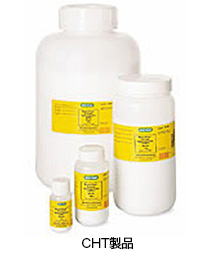
Ceramic Hydroxyapatite Media for Chromatography
Hydroxyapatite (Ca₁₀(PO₄)₆(OH)₂) is a calcium phosphate compound and the primary inorganic component of human bones and teeth.
It is highly biocompatible and is used as a biomaterial in applications such as artificial bone.
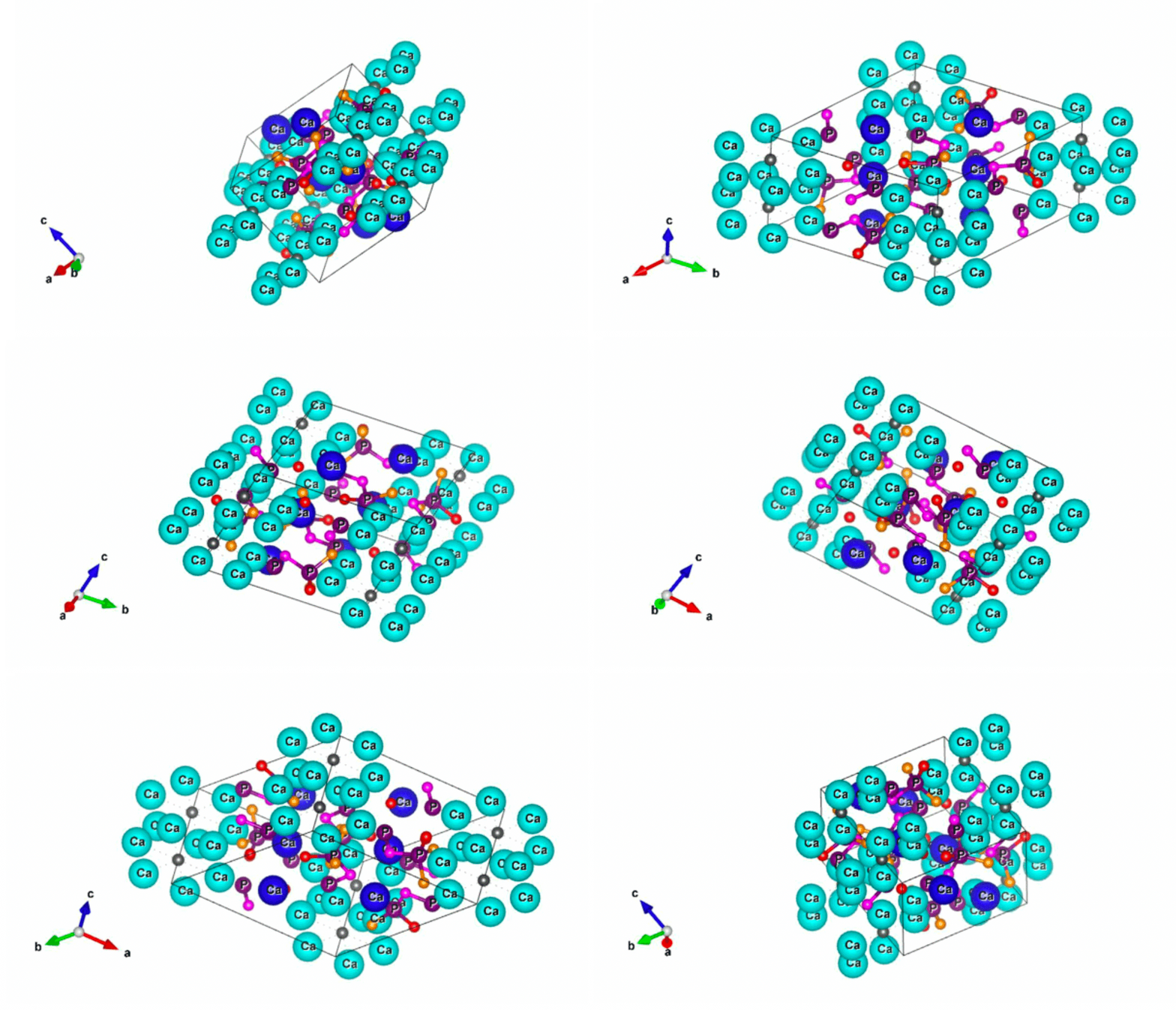
The History of Hydroxyapatite in Chromatography
Chromatography using hydroxyapatite was first developed at Uppsala University in Sweden in 1956. Until the 1980s, hydroxyapatite used as a column packing material was synthesised by researchers themselves from phosphate and calcium, and the conditions for its preparation had not been standardised. Consequently, the size and shape of the synthesised particles were inconsistent and irregular; when subjected to high flow rates, the particles would break down, causing the column to become clogged, and the material was unable to withstand repeated use.
The History of Hydroxyapatite in Chromatography at HOYA Technosurgical Corporation
In the late 1980s, our company (then known as Asahi Optical Industries) developed a technology for converting hydroxyapatite crystals into spherical ceramic particles and applied it to chromatography.
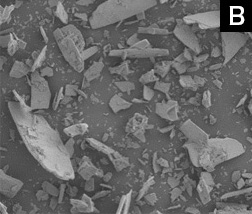
The conversion to spherical ceramic particles eliminated the shortcomings of hydroxyapatite support columns, which had previously used flake-shaped particles, such as low durability, low flow rates, lack of reproducibility and inter-batch variability.
Subsequently, with the boom in biopharmaceuticals from the 2000s onwards, this media was adopted by many pharmaceutical companies worldwide due to its highly effective performance in removing impurities during biopharmaceutical purification processes.
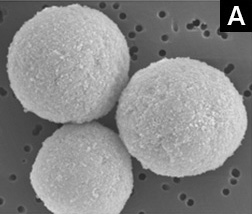
A: Ceramic spherical particles from HOYA Technosurgical Corporation
B: Flake-shaped hydroxyapatite particles
Features of HOYA Technosurgical Corporation’s hydroxyapatite chromatography resin
- Product stability
- Minimal batch-to-batch variation
- Manufactured in a GMP-compliant facility and of high purity
- Stable supply
HOYA Technosurgical Corporation’s hydroxyapatite support is used by pharmaceutical companies worldwide in the manufacture of antibody drugs and vaccines, thanks to its high impurity removal efficiency and excellent separation performance.
HOYA Technosurgical Corporation’s hydroxyapatite chromatography products and protein separation patterns
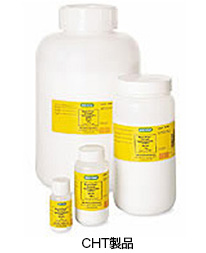
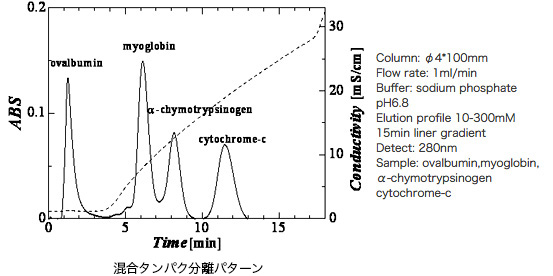
Top: CHT hydroxyapatite chromatography media
Bottom: Separation peaks of four types of mixed proteins obtained by phosphate buffer gradient elution using a hydroxyapatite column
*CHT is a chromatography media product manufactured by HOYA Technosurgical Corporation and distributed by Bio-Rad Laboratories, Inc.
Distributor: Bio-Rad Laboratories, Inc., Life Sciences Division
HOYA Technosurgical Corporation’s patent for hydroxyapatite chromatography
| Patent No. | Title of Invention |
|---|---|
| JP4,172,937 | Method for producing powder |
| JP5,198,815 | Method for producing powder |
| JP5,248,904 | Coated particles, method for producing coated particles, and adsorption apparatus |
| JP5,301,804 | Dried fluorapatite particles and adsorption apparatus |
| JP5,458,229 | Method for producing fluorapatite, fluorapatite and adsorption apparatus |
| JP5,458,230 | Method for producing fluorapatite, fluorapatite and adsorption apparatus |
| JP5,458,231 | Method for producing fluorapatite powder, fluorapatite powder and adsorption apparatus |
| JP5,458,239 | Separation method |
| JP5,463,537 | Separation method |
| JP5,509,493 | Method for producing powder, powder, and adsorption apparatus |
| JP5,509,494 | Method for producing powder, powder, and adsorption apparatus |
| JP5,724,050 | Powder, method for producing powder, and adsorption apparatus |
| JP5,847,584 | Powder, method for producing powder, adsorption apparatus |
| JP6,230,362 | Method for producing powder |
| JP6,898,535 | Method for purifying viruses using an apatite column |
| JP6,892,563 | Method for purifying charged substances |
| JP6,951,051 | Method for producing adsorbents |
Reference
Virus
- Kurosawa Y, Kurane I and Yamamoto A. Observation of Japanese encephalitis virus particles on ceramic hydroxyapatite by scanning electron microscopy. Med Biol. 153 (12), 607-610, 2009.
- Kurosawa Y, Saito M, Kobayashi S and Okuyama T. Purification of dengue virus particles by one-step ceramic hydroxyapatite chromatography. World Journal of Vaccines. 2, 155-160, 2012. DOI: 10.4236/wjv.2012.23020
- Kurosawa Y, Yamamoto A, Kurane I and Nakayama M. Development of a purification method for Japanese encephalitis virus particles using ceramic hydroxyapatite chromatography. Med Biol. 156, 410-416, 2012.
- M. Saito, Y. Kurosawa and T. Okuyama. Scanning electron microscopy-based approach to understand the mechanism underlying the adhesion of dengue viruses on ceramic hydroxyapatite columns. PLoS One 8(1), e53893, 2013. DOI: 10.1371/journal.pone.0053893
- Kurosawa Y, Saito M, Yoshikawa D and Snyder M. Mammalian virus purification using ceramic hydroxyapatite. Tech Note Bulletin 6549, Bio-Lad Laboratories, Inc. 2014.
http://www.bio-rad.com/webroot/web/pdf/lsr/literature/Bulletin_6549.pdf - Minkner R, Baba R, Kurosawa Y, Suzuki S, Kato T, Kobayashi S and Park EY. Purification of human papillomavirus-like particles expressed in silkworm using a Bombyx mori nucleopolyhedrovirus bacmid expression system. J Chromatogr B. 1096, 39-47, 2018. https://doi.org/10.1016/j.jchromb.2018.08.007
- Kurosawa Y, Khandelwal P, Yoshikawa D, and Snyder M. Single-step influenza and dengue virus purification with mixed-mode CHT ceramic hydroxyapatite XT media. Bulletin 7115, Bio-Rad Laboratories, Inc. 2018.
https://www.bio-rad.com/webroot/web/pdf/psd/literature/Bulletin_7115.pdf
Antibody
- Moro A, Yoshitake T, Ogawa T and Ichimura T. Single-step purification of pepsin-derived monoclonal antibody fragments from crude murine ascitic fluids by ceramic hydroxyapatite high-performance liquid chromatography. J Biochem. 144(6), 733-739, 2008. DOI: 10.1093/jb/mvn128.
- Saito M, Kurosawa Y and Okuyama T. Purification of anti-Japanese encephalitis virus monoclonal antibody by ceramic hydroxyapatite chromatography without Proteins A and G. Hybridoma (Larchmt). 31(1), 68-71, 2012. DOI: 10.1089/hyb.2011.0072.

 PRODUCT INFORMATION
List of products for medical professionals
Chromatography Resins Ceramic Hydroxyapatite Media
PRODUCT INFORMATION
List of products for medical professionals
Chromatography Resins Ceramic Hydroxyapatite Media